Randi Talks: Species Focus on Spring Beauties (Claytonia virginica)
We've mentioned in the past that Randi is a regular contributor to The WildStory Podcast, hosted by Ann E. Wallace, PhD, Poet Laureate of Jersey City, and Kim Correro, Rutgers Master Gardener and Director of State Programs at the Native Plant Society of New Jersey. It's a wonderful podcast for anyone interested in native plants, poetry, literature, ecology, and gardening in general. Each podcast contains conversations with poets, authors, and naturalists--previous episodes have included discussions with authors like Doug Tallamy and Barbara Kingsolver, to name just a few, and you can listen in on Apple Podcasts, Amazon Music, or anywhere you find your podcasts!
In the "Ask Randi" section, Randi answers questions that have been submitted about gardening with native plants, and in the latest episode, she talked about why it is you never see Spring Beauty seeds for sale, and why it's so unusual to see patches of this adorable little spring flower coming up these days. If you want to see what you're missing, read on! Here's what she had to say:
Today's "Ask Randi" question concerns one of my very favorite native plants! Recently, Bobbie from south Jersey asked "Why don't I ever seem to see Spring Beauty seeds for sale?" and in addition to Bobbie's question, our own Kim and Ann wanted to know more about this amazing little plant after they heard me speak about it at a WildStory event and Ann wrote a poem, included in her new book Keeping Room, titled "Such a Perfect Ecosystem," celebrating the delicate beauty of this often-overlooked plant and the rich web of life it supports. Bobbie, Kim and Ann have opened the door for me to talk about a bunch of things today, including:
- What are Spring Beauties, as a group?
- Why do I never see Spring Beauty seeds for sale?
- Why we don't see more of these plants in our yards and gardens?
- What insects rely on these early spring bloomers? (spoiler: there's an amazing little native bee that relies upon Spring Beauties!)
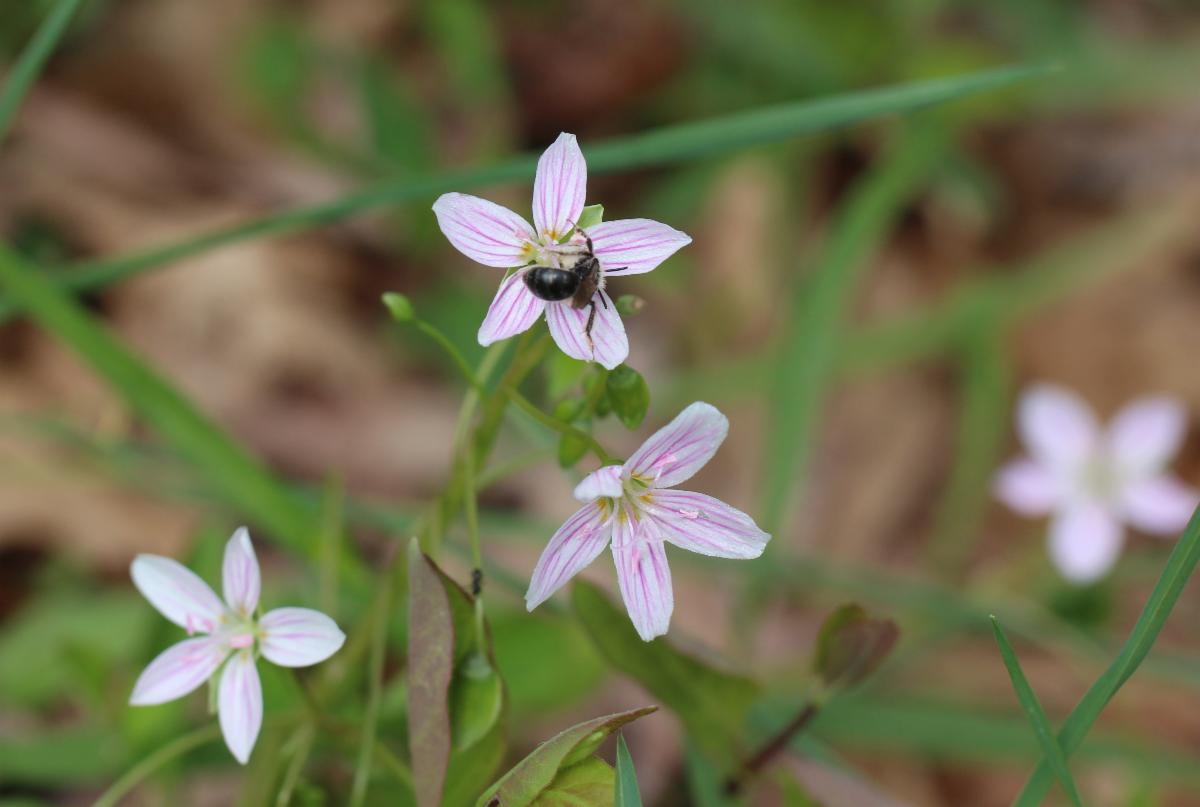
Question 1: "What are Spring Beauties?"
First of all, here in the mid-Atlantic, there are 2 species of Spring Beauties that you might encounter: the Virginia Spring Beauty, Claytonia virginica, is the only Spring Beauty that is native to NJ, but in New England, New York, Pennsylvania, and down the Appalachians you can also find not only the Virginia Spring Beauty, but also the subtly different species Claytonia caroliniana, known as the Carolina Spring Beauty. There are other Spring Beauties in other parts of the country, but those two species are the only ones you are going to encounter along the east coast.
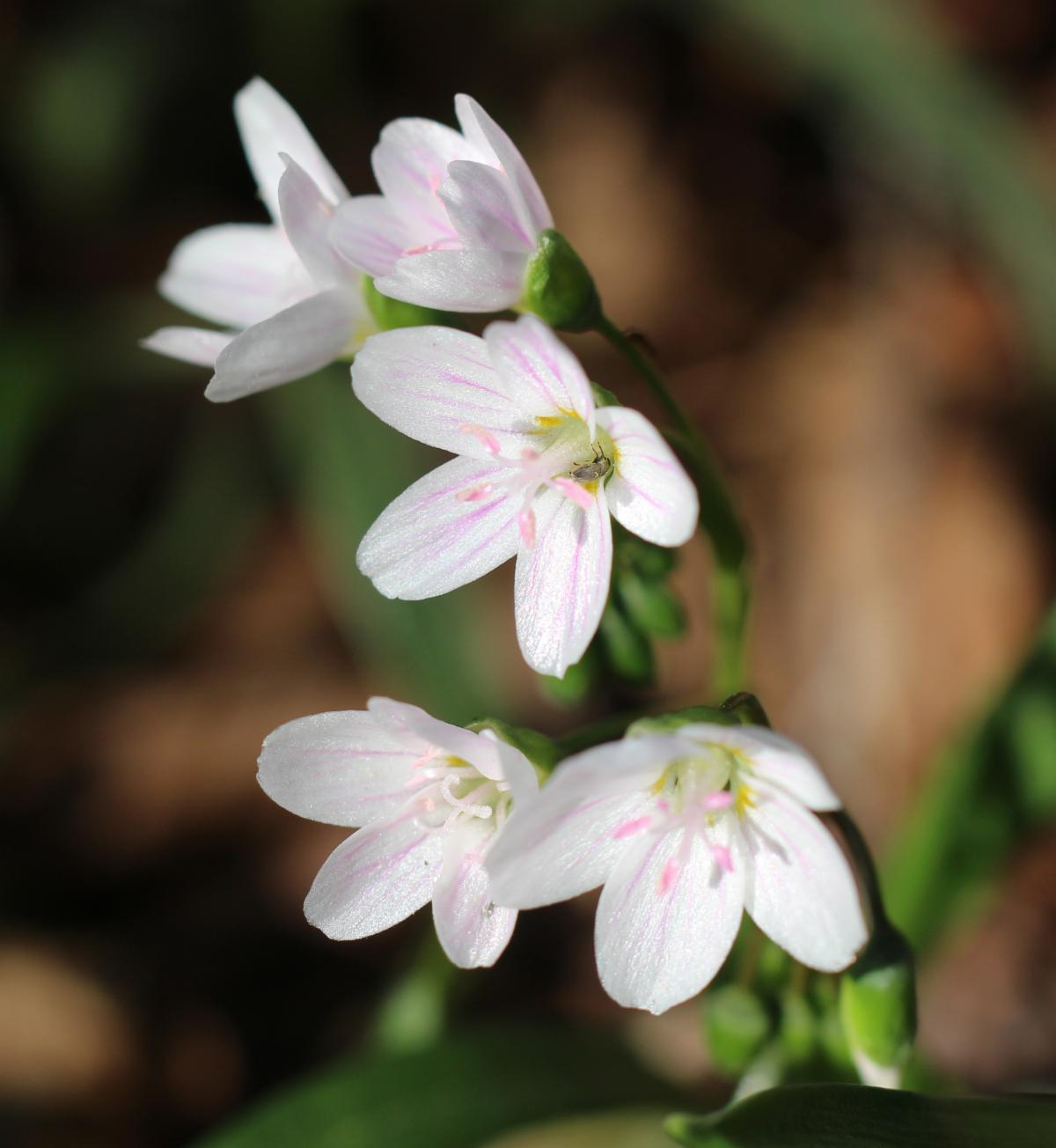
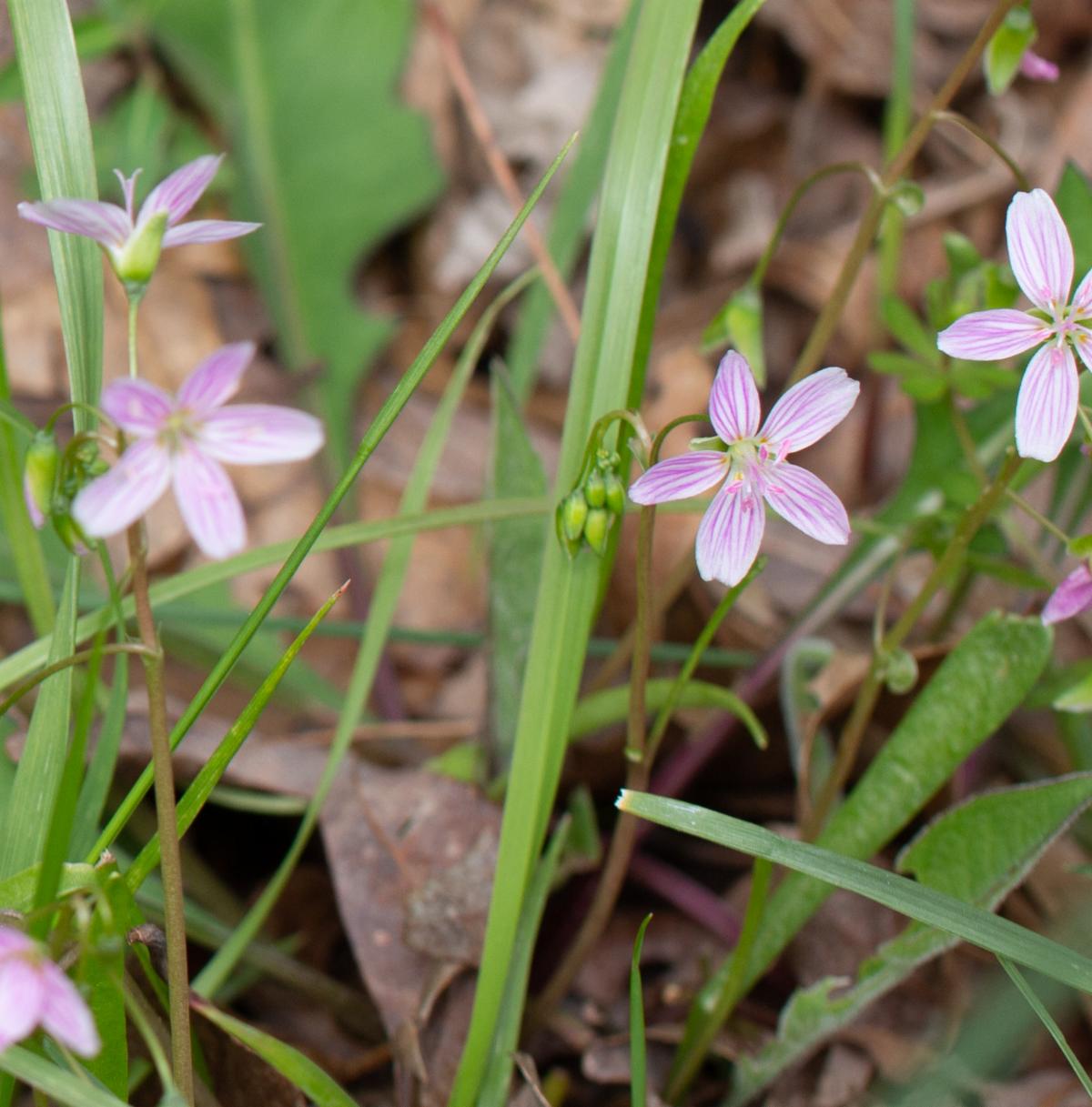
These wonderful little plants only grow about 6 to 10 inches tall, and are one of our very earliest spring wildflowers, with the charming adaptation of opening during the day and closing each night. They grow from little underground corms - adorably known as "fairy potatoes" - and produce fragrant white flowers with fine pink stripes, usually starting in late March and continuing until early May. When I was a kid growing up in northern Delaware these flowers were everywhere: in the woods, in gardens, in lawns. The ground under my feet would seem to burst into bloom with these tiny flowers - each only about a third of an inch across. And then, suddenly, they would all be gone - seemingly leaving no trace behind. As a child, I didn't really appreciate this of course - it was just a thing that happened, but Spring Beauties are one of our few, true spring ephemerals. That is to say, they sprout, flower, set seed, and then completely go dormant before summer even arrives - leaving behind no trace (except for the little fairy potatoes I would find below the soil surface when gardening).
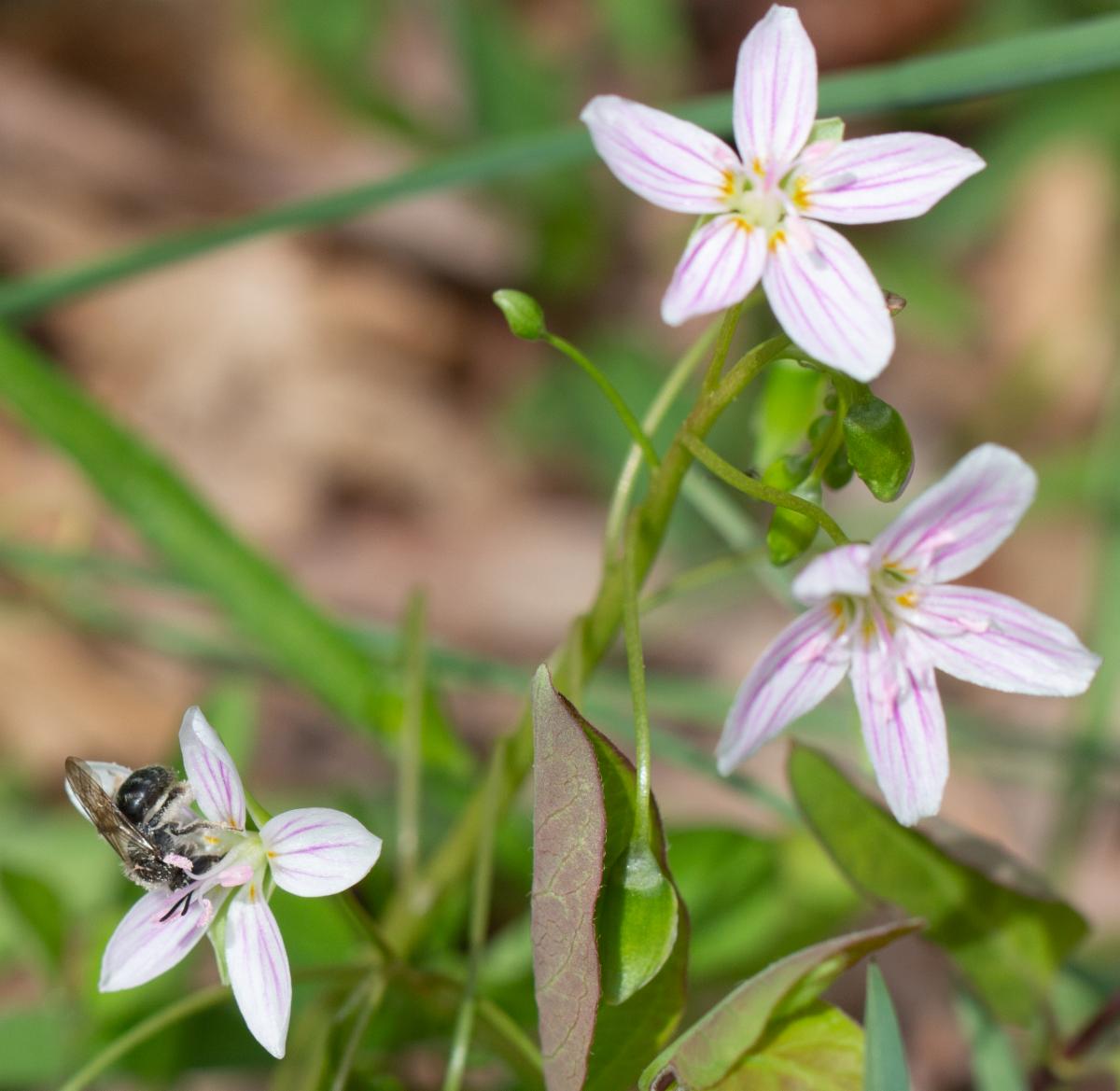
Question 2: "Why do I never see Spring Beauty seeds for sale?"
Well, collecting seeds of any plant that is only 6 inches tall is tedious, at best, but in the case of Spring Beauties, they set seed and decline very quickly. The flowers are produced sequentially on the flower stalk, so all of the seed capsules on a given seed stalk are not ripe at the same time. You have to keep an eagle eye on them to collect the seed, and even then - one hot day and the seed stalks that were, perhaps, just beginning to yellow around the edges are suddenly completely yellow, collapsing, and all of their previously green and unripe seed capsules have turned brown, split, and released their little shiny, black seeds. Not an easy seed to collect in quantity, believe me.
On top of that, these seeds need a period of warm, moist stratification followed by cold stratification before they will grow - in other words, they want to be planted right away and let nature take its course - with summer supplying the 'warm stratification' and the following winter supplying the 'cold stratification.' So, why do you rarely see seeds of Spring Beauties for sale? Because they are difficult to collect in bulk and grow best when planted fresh. At Toadshade Wildflower Farm, we only manage to harvest enough seed for our own plant production, and never have any to spare.
Given all of that, Spring Beauties are, in fact, very good at seeding in and spreading - albeit slowly - in place. If you have even a small patch of Spring Beauties, leave them be - and go very gently on 'garden cleanup' in that area. The plants will seed in and the slow-growing seedlings will - in a couple of years - be large enough to flower. Many years ago, I stupidly thought that the leaves on the ground in my garden would 'smother' the Spring Beauties growing there. No matter how carefully I removed the leaves, I invariably damaged the Spring Beauties that had begun to sprout. And then I had an epiphany - Spring Beauties are woodland wildflowers! You don't need to clean up the leaves for them! They thrive in a 'leave the leaves' situation, as do so many native plants.
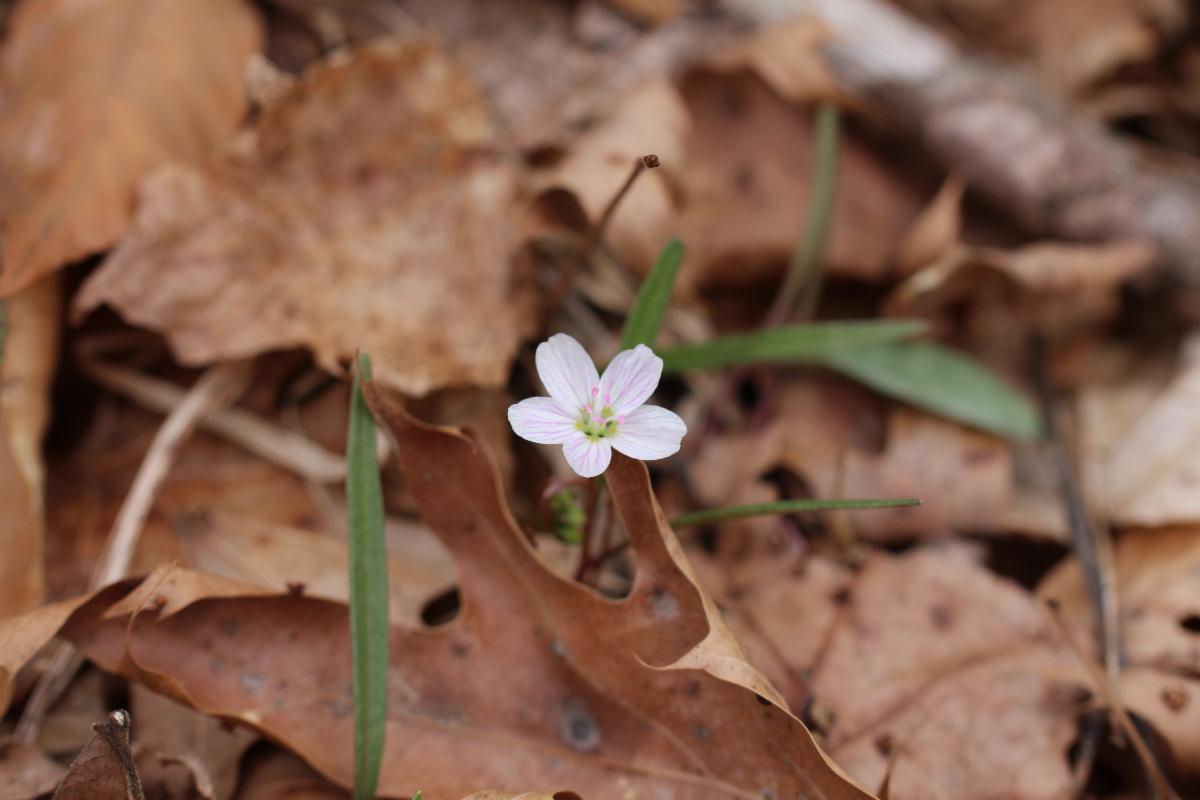
Question 3: "Why don't we see more of these plants in our yards and gardens?"
One answer, I am afraid, is that we simply don't take the time to look and admire these little gems. But another answer is over-management of our lawns and gardens. Pre-emergent herbicides used in garden spaces? Yup - that will prevent spring beauties (and other native plants) from seeding in and spreading. Fastidious raking and clean up of gardens in the spring? That will do a lot of damage to these (and other!) early flowering plants. Broad-leaf weed killers applied to a lawn? Yup - that will also kill all of the spring beauties.
Many years ago I was horrified after my aging parents hired a lawn care company and the first thing the company did was treat the lawn to kill anything that wasn't grass - throughout the lawn, the spring beauties, trout lilies, and violets that I used to pick spring bouquets of for my mother were all gone. Fortunately, these plants lived on in the gardens, but it was heart-wrenching to me to see them diminished to only surviving in the garden 'islands' on the property. I have said it before, and I will say it again - what is wrong with flowers in the lawn?
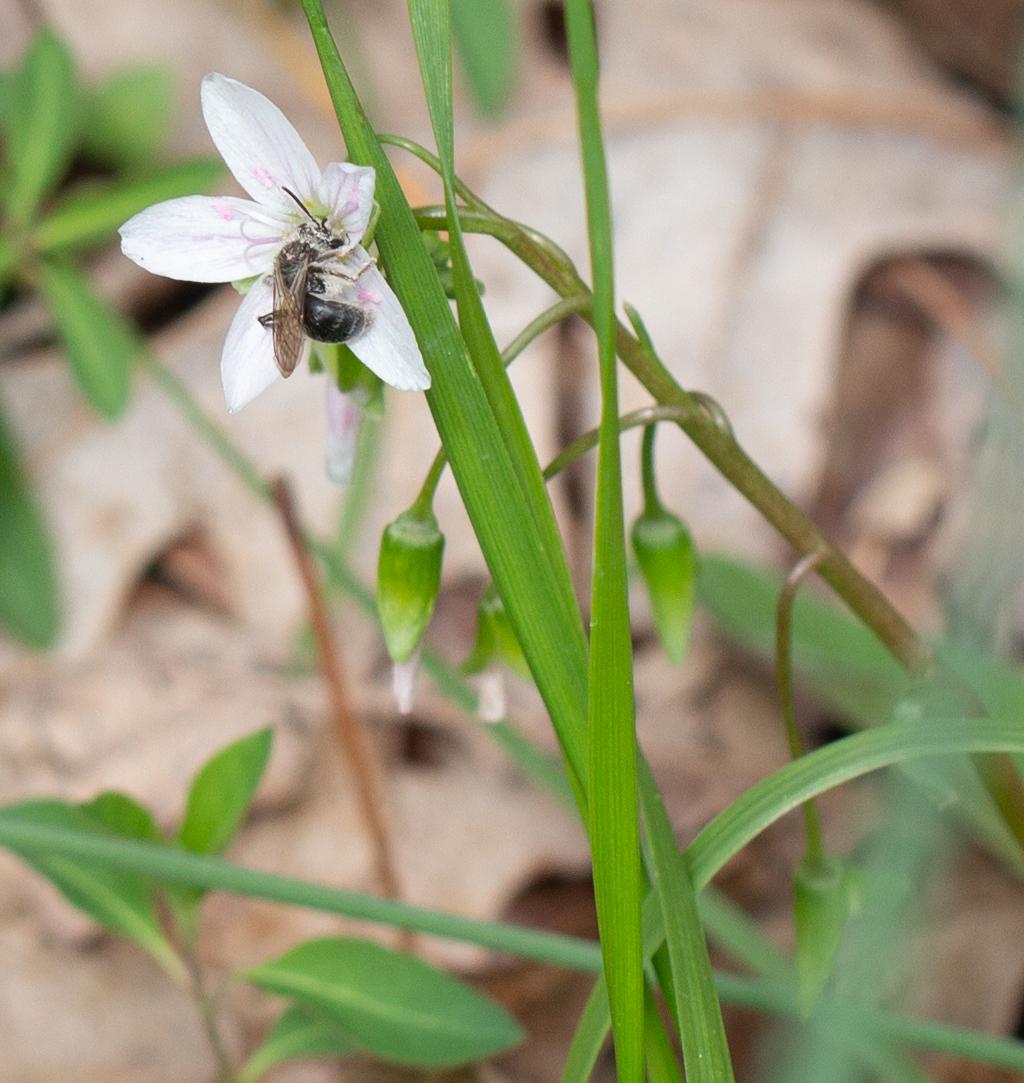
Question 4: "What insects rely on these early spring bloomers?"
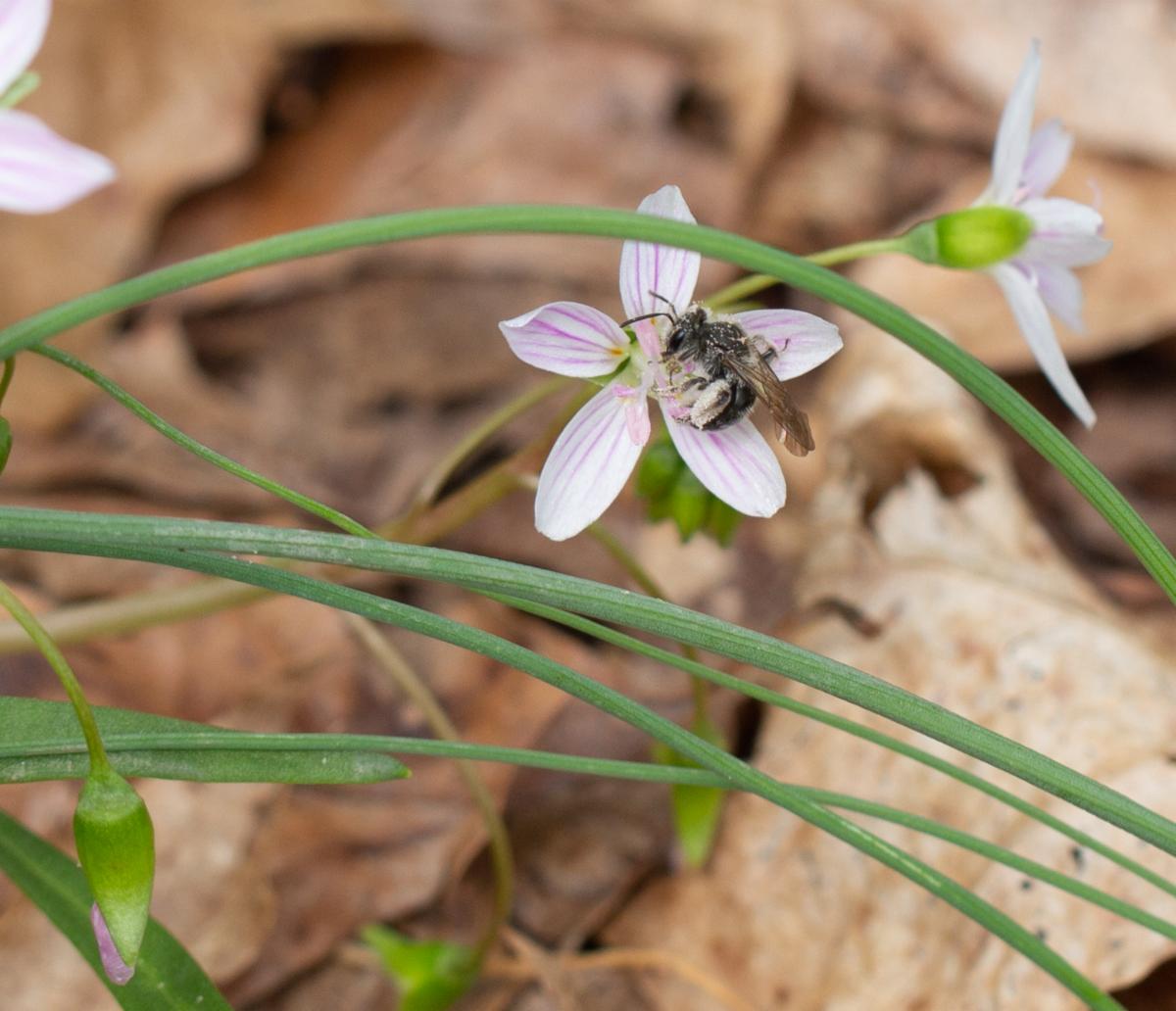
At the end of the day, native plants, however beautiful, are not there simply for us to admire. They all play important roles in the environment that most of us pay no attention to, let alone see. In the case of Spring Beauties, they have a tiny native bee that is entirely dependent upon them. The Spring Beauty Mining Bee, Andrena erigeniae, overwinter as adults and emerge in the spring just as Spring Beauties begin to flower. Their complete life cycle revolves around these spring ephemerals - literally everything they do depends upon these plants. The adults even mate while sitting on the flowers! On warm days, from about 10 in the morning until 2 in the afternoon, the females collect the pink pollen to create pollen balls to provision their nest - laying one egg on each of the pollen 'cakes' that they create. The offspring then hatch and spend the rest of the summer in the brood chamber, a shallow gallery near the soil surface under a thin layer of leaves, with the larvae feeding off the Spring Beauty pollen and growing until they pupate in late summer. Protecting the Spring Beauty Mining Bee brood chambers is just one more reason to leave the leaves in your gardens.
I was absolutely delighted and honored to recently discover that my friend and co-producer of The WildStory, Ann Wallace, wrote a poem about this lovely pas de deux between the Spring Beauty and the Spring Beauty Mining Bee, after I waxed philosophic about it at a Wildstory live event in Madison a few years ago. Her poem, entitled "Such a Perfect Ecosystem", is in her newly published poetry book Keeping Room. Writing about these small fleeting plants and their adorable bees, she notes that many of us "don't see the flowers at all. But they are not invisible. Not to the mining bees".
At the risk of trying to be poetic myself, we should all look for beauty, however small, however fleeting, that is around us all the time. Look for the Spring Beauties, revel in their beauty and fragrance, and admire their tiny mining bees with their loaded pink pollen baskets. It is a show worth crouching down and looking for, to be sure.